

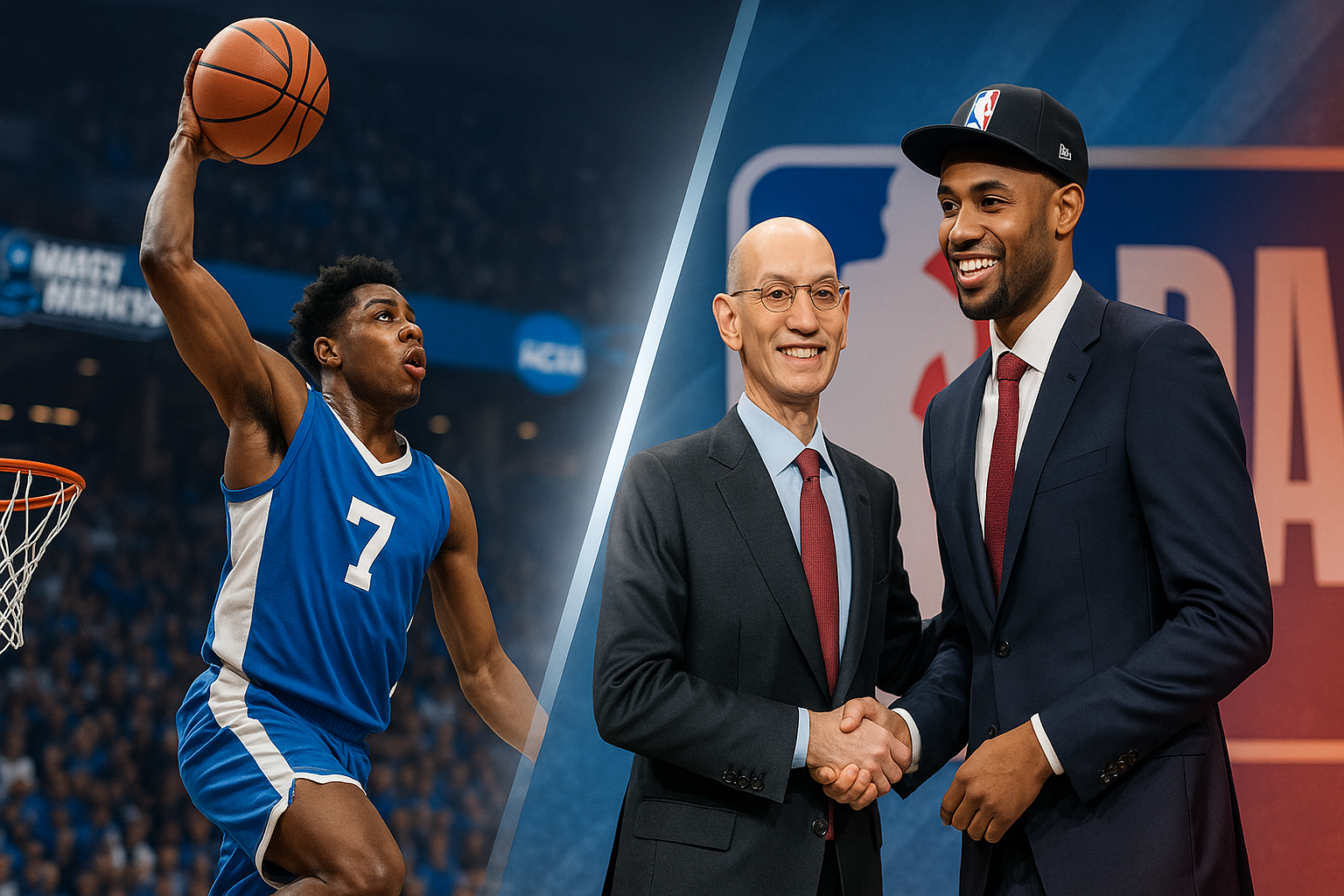
From College Courts to NBA Glory: How March Madness Fuels Pro Basketball Stars
By PulsPie | August 2025
Introduction: College Basketball’s Biggest Stage
Every spring, millions of Americans turn their attention to one of the most exciting sporting spectacles in the country—March Madness. The NCAA Men’s Basketball Tournament is more than just a college championship; it’s a cultural phenomenon that captivates fans, brands, and—perhaps most importantly—NBA scouts.
For decades, the NCAA Tournament has served as a proving ground for the next generation of NBA stars. A stellar performance in March Madness can elevate a player's draft stock, generate national buzz, and cement their status as a future pro. For many players, it’s not just about chasing a college title—it’s about launching an NBA career.
How March Madness Puts Future NBA Stars in the Spotlight
In the NBA, talent evaluation is a year-round business, but there’s something unique about March Madness. It's a time when college basketball’s top prospects face intense competition, high-pressure moments, and national scrutiny—all broadcast to millions.
During the tournament, prospects are no longer just names on scouting reports—they become household names. From Ja Morant’s electric performances with Murray State to Jamal Murray’s sharpshooting at Kentucky, March Madness provides the ideal stage for rising stars to showcase their skills.
Why is this stage so important? Because it mimics the NBA environment:
- Win-or-go-home pressure
- National TV exposure
- Elite coaching and playmaking
- Fast-paced, competitive matchups
These are the very factors that help scouts evaluate how players will transition to NBA-level basketball.
Scouting Season: Why the NBA Watches Every Play
NBA scouts, general managers, and front-office executives flock to March Madness games for a reason. It’s not just about raw statistics—it’s about intangibles. How does a player perform under pressure? Do they lead their team? Can they defend against elite opponents?
In many ways, the NCAA Tournament acts as a pre-draft combine:
- Scouts examine decision-making, composure, and basketball IQ.
- Physical traits like explosiveness, length, and defensive versatility are scrutinized.
- Interviews and media exposure offer insight into character and maturity.
It’s no surprise that franchises often adjust their draft boards based on what they see in March. For fringe prospects, a breakout tournament performance can mean the difference between going undrafted or becoming a first-round pick.
From Hype to Handshake: March Madness and the NBA Draft
The connection between March Madness and the NBA Draft has never been stronger. A player’s performance in the tournament can radically shift their perceived value.
Take Donovan Mitchell, for example. He was considered a mid-to-late first-round pick before he lit up the tournament with Louisville. After March, he shot up the boards and became a lottery pick. The same happened with Tyrese Haliburton, Malik Monk, and Jalen Suggs, whose buzzer-beater with Gonzaga remains one of the most iconic shots in recent tournament history.
This transition—from March Madness to draft night—is a journey that has become almost ritualistic in American basketball. It’s a time when one shining moment can turn into a multi-million-dollar NBA contract.
Breakout Performances That Changed NBA Careers
History is filled with examples of players whose March Madness heroics catapulted them into NBA stardom:
- Stephen Curry (Davidson, 2008): Arguably the best case. Curry’s magical run made him a national name and proved his elite scoring ability.
- Kemba Walker (UConn, 2011): His unforgettable tournament run—including the Big East tournament—cemented his top-10 pick status.
- Carmelo Anthony (Syracuse, 2003): Led his team to a national title as a freshman, dominating every step of the way.
- Ja Morant (Murray State, 2019): Used the spotlight to show off his explosiveness, vision, and athleticism, moving him firmly into the No. 2 pick conversation.
These moments aren't just feel-good stories—they're real-time scouting opportunities. And every year, a new group of prospects tries to write their own legacy.
The One-and-Done Effect: Changing the College-NBA Pipeline
Since the NBA implemented the “one-and-done” rule in 2006, requiring players to be at least one year removed from high school to enter the draft, March Madness has become even more important. For many top recruits, it’s their only year of college basketball—and their only national showcase before going pro.
Programs like Duke, Kentucky, and Kansas have become pipelines for NBA talent. Coaches like John Calipari have leaned into the one-and-done model, preparing players for both college success and NBA readiness.
However, with the emergence of alternative paths—like the NBA G-League Ignite, Overtime Elite, and international options—some players are bypassing college entirely. Still, March Madness remains the gold standard for public visibility and legacy.
It’s not just a basketball tournament—it’s an audition for the biggest basketball league in the world.
Conclusion: March Madness as the NBA’s Talent Launchpad
While the NCAA Tournament crowns a national champion, its true legacy may lie in its ability to shape the future of professional basketball. Year after year, March Madness introduces fans to the stars of tomorrow—players who will define the next era of the NBA.
For scouts, it's a talent evaluation goldmine. For fans, it's a glimpse into the future. And for the players, it's often their first real test on a national—or even global—stage.
In the world of basketball, few platforms are as powerful as March Madness. It’s not just about the brackets, buzzer-beaters, and busted predictions. It’s about turning college dreams into NBA reality—and that’s why it remains an essential chapter in every future star’s story.

